Hey Gemini, I have this System Card:
(System card)
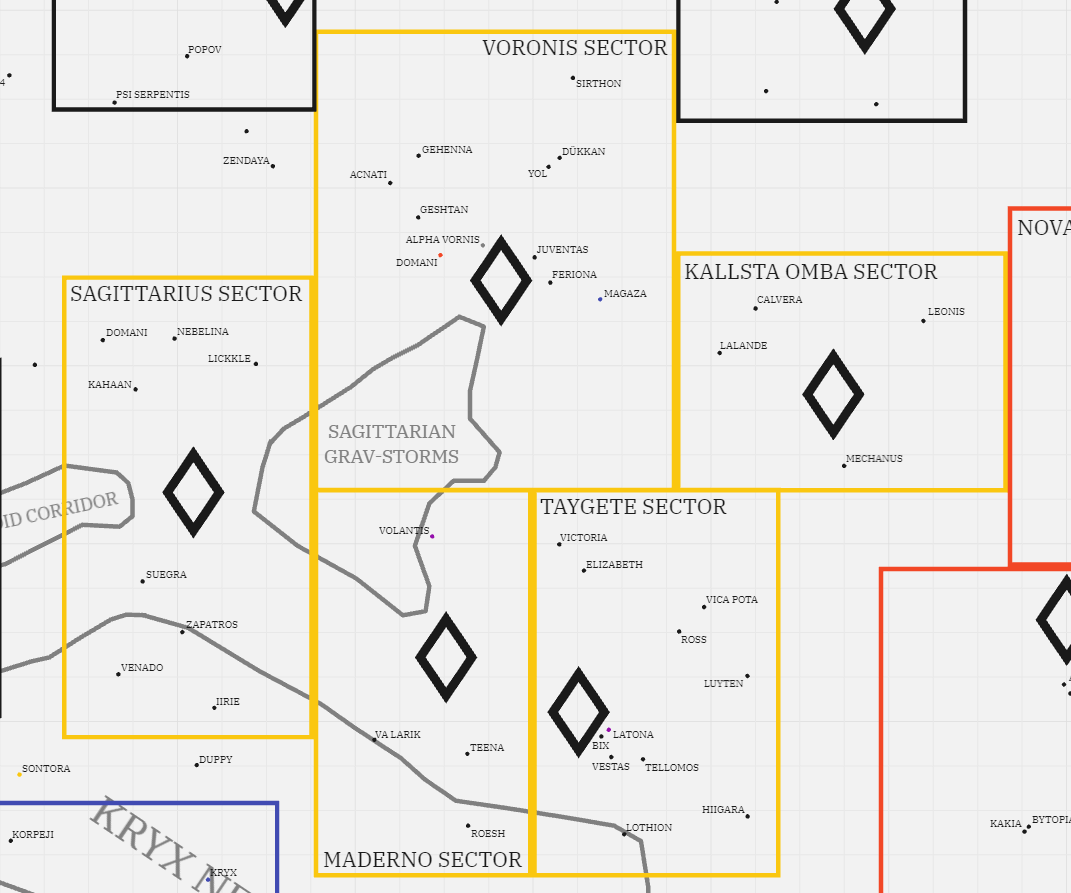
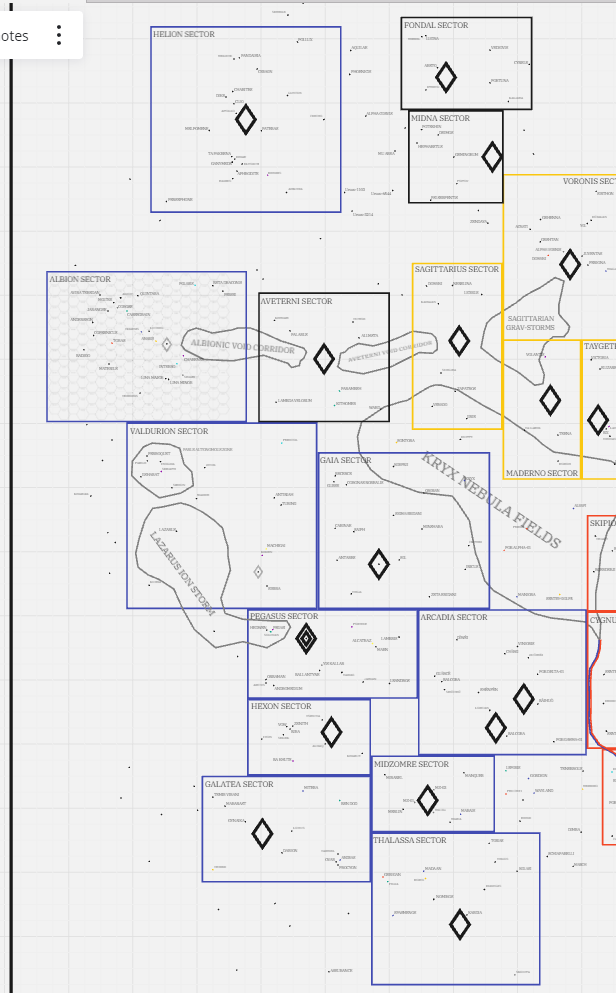
Could you help me fill out the “Current Ships in System” part? I have some more information here:
Galactic Ship Registry (GSR)
The Galactic Ship registry is an organization providing legal services to ship owners. They keep a roster of ship registrations along with universally acknowledged namespaces. Some of these are:
- IS … - Independent Ship
- UPN - Unified Planets Ship (Military / Government)
- LYS - Lanternyard Ship (Military / Government)
- CTGS - Confederacy of Terran Gates Ship (Military / Government)
Along official namespaces, corporations can apply for their own prefix to ship names for an annual fee:
- ARS - Al-Rabata Ship
- SPS - S. Pace Ship
- SCS - Security Compound Ship
- PCS - Parromax Cargo Ship
- etc.
If you know what you are doing though, transponders are not very difficult to tamper with. Therefore it’s completely possible, not necessarilly legal, to run your ship with any name you desire.
Some Context:
Security Compound Company (SecCom Co.)
Overview
| Type | Private Military Comapny |
|---|---|
| Organization | Company |
| Alignment | Lawful Neutral |
| Role | Security and Private Military |
| Size | 4 - Galactic Operation |
Iconography
-1.png)
Profile
-1.png) SecCom. Company is the largest private military service provider in the galaxy. Using a network of smaller, subsidized companies and their intricate organizational structure, they manage to bring stability to most worlds that do not have the capabilities for their own law enforcement, and security to anyone who pays the contract.
SecCom. Company is the largest private military service provider in the galaxy. Using a network of smaller, subsidized companies and their intricate organizational structure, they manage to bring stability to most worlds that do not have the capabilities for their own law enforcement, and security to anyone who pays the contract.
| CEO | Pharell Tikikoma |
|---|---|
| Headquarters | Jacien III (Orbital), Geshtan |
| Founding Date | August 12th, 2217 |
| Primary Industry | Military and Security Services |
| Flagship Product | Hygieia Planetary Defense Package |
| Secondary Industries | Cybersecurity Training & Education Resource Extraction & Manufacturing |
| Net-Worth | 560B Cillings |
| R&D Focus | Biotech Weapon Systems Communication Tech Personnel Equipment |
| Subsidiaries | - |
| Cooperations | Parle Autonomous Zone Independent Planetary Governments Galactic Banking Consortium |
Story
Placeholder
Philosophy
Despite their surface-level ruthless image. Their mission of keeping the peace in places where there is none, is a core part of their company ethics, and they will be honoring their contracts nevertheless the circumstances.
Relationships
| Faction | Relationship Type | Description |
|---|---|---|
| Parle Autonomous Zone | Standing Security Forces | SecCom acts as the de-facto military and police force for the entire zone, handling everything from border patrol to internal security under a long-term, exclusive contract. |
| Independent Planetary Governments | Security Contract | SecCom provides tailored security packages to individual worlds, often acting as a deterrent against pirates, corporate rivals, or local insurgents. |
| Galactic Banking Consortium | VIP Protection Flat | Provides elite, heavily armed security details for high-level executives, secure transport for valuable assets, and fortification of key financial hubs. |
| Kanewalker Miltech | Vehicle Supplier | Kanewalker is SecCom.’s most important supplier, providing Arms and Heavy Artillery to their forces. |
Organization
Headquarters: Jacien III (Orbital), Geshtan
Leader(s): Pharell Tikikoma
Prominent Members: Placeholder
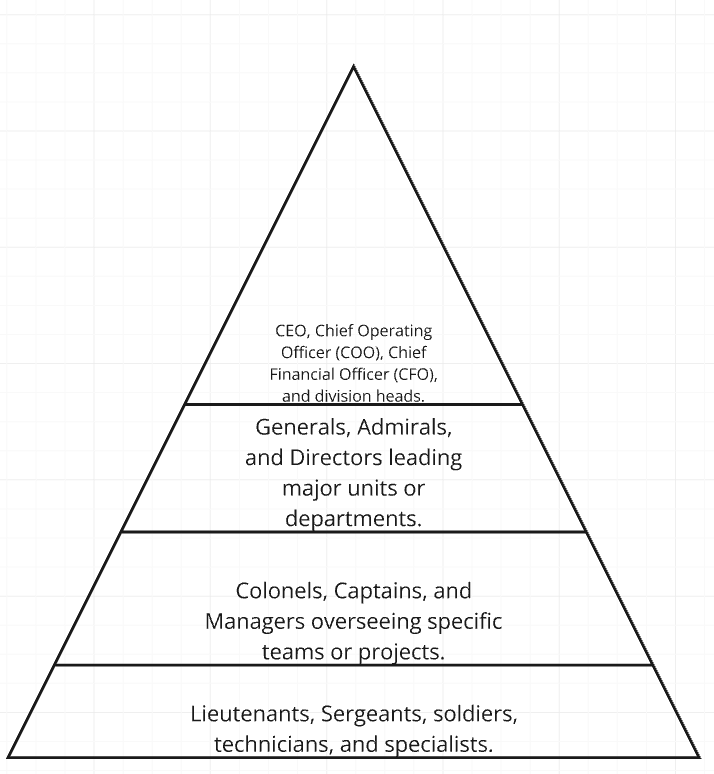
Central Command (CentCom)
CEO Board of Directors Regional Command Centers
Divisions (of each RCC)
Ground Forces Naval and Aerospace Logistics and Support Cyber Warfare and Intelligence Research and Development Corporate Services
Resources
With a steady income from their contracts, SecCom is able to acquire high-tier military equipment even from more exclusive suppliers such as Betelgeuse Imperial Shipyards, Hammer Munitions Company and Kanewalker Miltech.
Methods
Placeholder
Background
Placeholder
Products
Placeholder
Group: Al-Rabata
Overview
| Type | Value |
|---|---|
| Alignment | Lawful Neutral |
| Role | Raw Materials, Exploration, Manufacturing |
| Organization | Corporation |
| Size | 5 - Galactic Monopoly |
Iconography

Profile
Al-Rabata was founded after a group of the 10 largest mining operations in the Unified Planets of Sol began to see taxation loopholes in consolidation. This gave rise to a major Monopoly which caused wide-scale exploitation especially in the frontier sectors of the new colonies. In the last 100 years, the corporation has regulated itself to be more moderate, with regulations from all major factions in the galaxy pushing for it.
| CEO | Hakim al-Wadud |
|---|---|
| Headquarters | Fondal Prime, Fondal |
| Founding Date | 2212 |
| Primary Industry | Interstellar Mining |
| Flagship Product | Trask Intermediary Fuel Supply |
| Secondary Industries | Ship Construction Deep-Space Prospecting |
| Annual Revenue | ~6 Trillion Credits |
| R&D Focus | Gravitational Drill Technology High-Density Fuel Refinement Microparticulate Collection |
| Subsidiaries | Al-Rabata Mining Al-Rabata Shipyards |
Story
Al-Rabata began as a joint venture between frontier prospectors. Early breakthroughs in processing rare isotopes from asteroid fields secured its position. Over centuries, the corporation outpaced competitors, controlling essential supply chains and acquiring independent firms.
Philosophy
Al-Rabata emphasizes efficiency, long-term stability, and strict compliance with contracts. Its leadership supports measured expansion and technological advancement over hasty gains.
Relationships
| Faction | Relationship Type | Description |
|---|---|---|
| Lanternyard Incorporated | Competitor | Frequent bidding wars over mineral rights |
| Kobashi Shipyards | Supplier | Provides armored freighters for shipment |
| Trask Intermediaries | Client | Buys refined Fuels for their network of Intermediary Refueling Stations |
| Galactic Trade Council | Regulatory Body | Monitors safety and trade compliance |
Organization
Headquarters: Almarad Prime Orbital Facility, Fondal Prime
Leader(s): Hakim al-Wadud and a board of sector directors
Prominent Members: Chief Engineer Renn Larosi, Chief of Survey Mira Torson
Al-Rabata’s corporate structure is hierarchical, with divisions dedicated to resource acquisition, refining, construction, logistics, and research.
Resources and Methods
Resources (Company Assets)
| Resource | Description | Origin | Use |
|---|---|---|---|
| Al-Rabata Shipyards | In-house Shipbuilding Company | Major Profit Margins | In-housing of Construction/Maintenance of Vessels |
| Corporate Security Fleets | SecCom Security forces for major mining operations | Security Compound Corporation | Security against piracy |
Methods
| Method | Description | Application |
|---|---|---|
| Vector Drilling | High-precision extraction in zero-G fields | Efficient asteroid mining |
| Microparticulate Collection | Harvesting Large fields for exotic isotopes | Increasing profit margins and monopolising. |
Background
Al-Rabata’s rise is tied to breakthroughs in extraction technology. By securing exclusive rights to resource-rich sectors and negotiating long-term contracts, it achieved uncontested dominance.
Products
Resources
Basically all metals, fuels and other resources extracted from space that are in major demand.
Ships
AMS-12 Industrial Freighter YB-300K Hauler Kanton Freighter A-230 Runabout Khárybdis Ready Ship
Group: Lanternyard Inc.
Overview
| Type | Government |
|---|---|
| Activities | Diplomatic, Economic, Military, Intelligence |
| Organization | Megacorporation |
| Currency | Lanterns (Company Scrip), but using Cillings for Bookkeeping |
Iconography
Profile
Lanternyard Incorporated is a Megacorporation which is most notably known for its lobbying stunt of coercing/infiltrating the higher Government Ranks of the Unified Planets of Sol into allowing them sovereign territory in the core sectors of the galaxy. It’s socially segregated into corporate ladders, with low level workers making up around 80% of the population. For some it is a corporate hellscape while for others a bountiful utopia.
Story
The megacorporation started as a spacecraft manufacturer on Alpha-Centauri, which brought a novel approach in the tide-turning times of discovering the Jetgate in Gaia. They developed the precursors to their modern flagship freightliners, which served the same purpose of consolidating large cargo and vessel masses rather than sending individual ships through gates. This quickly gave them a monopoly on gate-travel, which was only very much later challenged by the likes of S. Pace Logistics and the Galactic Rail Company by buying outdated and mothballed freightliner vessels from Lanternyard. Though the key in their designs was the shape, which mimics that of an arrow’s aerodynamics. It was Lanternyard, or by extension Danube Research Corp., that found this to greatly reduce hull damages during gate-travel.
Declaration of Sovereignty
Lanternyard’s power grew exponentially after a landmark deal securing sovereign rights to the Volantis system in 2243. This “deal” involved a mix of coercion, bribery, and strategically placed sympathizers within UPoS’s government. From there on, legal cases were won left and right which established surrounding systems as part of the territorial claim of the corporation.
Since then, they’ve continually pushed boundaries, claiming sovereign control over regions where their interests align with “public good,” as defined by their executives. Most of these regions were strategically picked out under the condition that local footholds of the Unified Planest were already weak, and it was argued in some cases that it was easier of them to give up the system where they cannot enforce law in either way.
However, an underground resistance network called “Sagittaria Eaterna” opposes them, exposing Lanternyard’s more insidious practices where possible.
Archeologic Significance
Internal documents suggest that Lanternyard’s early success was, in-part, due to a major pretech data artifact they recovered … somewhere. Since then, the research company Danube Research Corp. has been contracted many times by and recently permanently signed a deal with Lanternyard to continue their research in exchange for funding. Even now, wherever there is a hint of pretech, those two are close by unless they are actively kept from it through regulations … but even that rarely hinders them behind the curtains.
Philosophy
“Challange Breeds Progress; Progress knows no Conscience”
Lanternyard operates under an unofficial mantra: “Challenge Breeds Progress; Progress knows no Conscience.” Publicly, they claim to believe that “Innovation must be nurtured and guided, even through necessary control.” This philosophy justifies their aggressive actions and territorial ambitions. Among executives, lower-level employees are referred to as “human assets,” valued only as contributors to corporate objectives. In contrast, lower ranks are fed narratives of opportunity and upward mobility to encourage loyalty, though true promotions are rare and carefully controlled.
Relationships
Subsidiaries
| Faction | Relationship Type | Description |
|---|---|---|
| Charenet Driveyards | Subsidiary | Propulsion supplier of Lanternyard. Their presence in the UPoS has been instrumental to LY’s influence on the market inside the Unified Planets. |
| Lothion Fleet Systems | Subsidiary | Supplies a number of ship systems and sensors. |
| Zenith Communications | Subsidiary | Provides ship-mounted communications systems. |
| Lanternyard Nullcrafts | Subsidiary | Ship Construction and Shipyard management. Owns and rents out a large portion of dock facilites in the galaxy. |
| MedTac Insurance & Protection | Subsidiary | Corporate Security and Medical protection service provider |
Diplomacy
| Faction | Relationship Type | Description |
|---|---|---|
| Danube Research Corp. | Cooperation | Danube is Lanternyard’s private research contractor. Rumors suggest it originated from Lanternyard, but it since has split off as its own corporate entity and furthers its own goals. |
| Unified Planets of Sol | Commercial Exploitation | Lanternyard Inc. has a commercial foothold within the UPoS, pushing high-end consumer goods and advanced technologies that are just below military-grade. The UPoS relies on Lanternyard for specialized tech imports but maintains tight regulations, forcing LY to negotiate for broader market access and favor with local governments. |
| Confederacy of Terran Gates | Commercial Exploitation | Lanternyard trades extensively with the Confederacy, especially in sectors where advanced resource extraction and rare materials are involved. Though technically commercial, their relationship is close to exclusive in certain territories, as Lanternyard often outbids local competitors for Confederacy mining contracts and supply chains. |
| Shat’azul Dominion | Loose Diplomatic Relations | Occasional Sha’tazul technologies find their way into Lanternyard’s labs. Either through ‘acquisition’ or diplomacy |
Organization
Headquarters: Iridescence, Volantis
Leader(s): Brian Rhineman (CGO - Chief Governance Officer) Prominent Members: Olivia Garter (CIO - Chief Intelligence Officer)
Lanternyard’s hierarchy is rigidly enforced, with subsidiaries contributing unique expertise. The “Corporate Guard” enforces internal security, and a group known as the “Augurs” focuses on predictive analytics, identifying threats to Lanternyard’s dominance. The company’s structure allows it to operate like a government, enforcing corporate law and order within its territories.
Corporate subsidiaries are able to engage in rivalries with each other, as the higher core managers in Lanternyard believe in a Darwinist philosophy where companies can prove their strength through various actions that might appease their corporate overlords.
Resources
Lanternyard’s most renowned product is its Freightliner series—a flagship line of massive interstellar cargo vessels designed to transport entire fleets or high-value goods efficiently through the Jetgates. Built to consolidate vast quantities of cargo and vessels in a single, controlled passage, the Freightliners remain unmatched in durability and capacity,
Exclusive neural interface technology for piloting.
They also operate the “Gray Exchange” through a network of underground quasi-criminal fronts. It is an unofficial black-market channel that provides experimental technology to select clients. Zenith Communications maintains a secure network for Lanternyard’s operations, making them indispensable to allies and clients alike.
Methods
Lanternyard uses “Corporate Residency Contracts” to bind workers to their territories, forfeiting benefits and pensions if they attempt to leave. Surveillance VI, code named “Spectre”, monitors all communication in Lanternyard-controlled regions, enforcing compliance and security. Dissidents are “persuaded” to stay in line before leaving for nations with a better quality of life. Those persuasions can range from promises of a climb upwards the corporate ladder to the kidnapping of family members and pressuring people through other such methods.
Additional Details
Placeholder
Government: Unified Planets of Sol
Overview
| Type | Government |
|---|---|
| Role | Diplomatic, Economic, Military, Intelligence |
| Organization | Metafederal Republic |
| Currency | Cillings |
Iconography
Profile
The Unified Planets of Sol were the original human government that formed from Earth and its Colonies. Through History it has gone through many changes, through internal and external struggles which have shaped it into the bureaucratic Behemoth it is today. Once spanning most of the Galaxy, the space that is now under unified planet jurisdiction focuses on the galactic South and East.
It offers its citizens a lush quality of life over many worlds, though its ideology sometimes clashes with minority groups on both a diplomatic and sometimes even a military level.
Powers and Duties
The Unified Planets of Sol operates as a stabilizing force within its territory, promoting law, order, and a high standard of living for its citizens. Key duties include:
-
Interstellar Security and Defense: Through the Unified Planets Navy (UPN) and other military branches, the UPoS safeguards its borders, especially along sensitive areas like the Kryx Nebula Fields and the Serengeti Line.
-
Galactic Governance: The metafederal structure allows local autonomy for sectors while centralizing critical policies. This includes the regulation of interstellar trade, enforcement of universal rights, and environmental preservation across colonized worlds.
-
Technological Advancement: UPoS leads in researching and regulating advanced technologies, with particular emphasis on starship propulsion, sustainable energy sources, and ethical Machine Intelligence.
Story
Earth Relocation
After the discovery of the Jetgates, Earth was moved to a star system close to the Gaia BH1 black hole in a monumental feat of engineering.
Humanity, already having colonized large parts of the surrounding star systems through the development of Short-Warp in 2102, a ship-drive which can propel a starship over lightyears in superlight speeds. For example, in 2142, a voyage from Earth to Alpha Centauri (4,36 lightyears) took around 1 month with Short-Warp. With modern short-warp engines, this time got cut down to 1 hour.
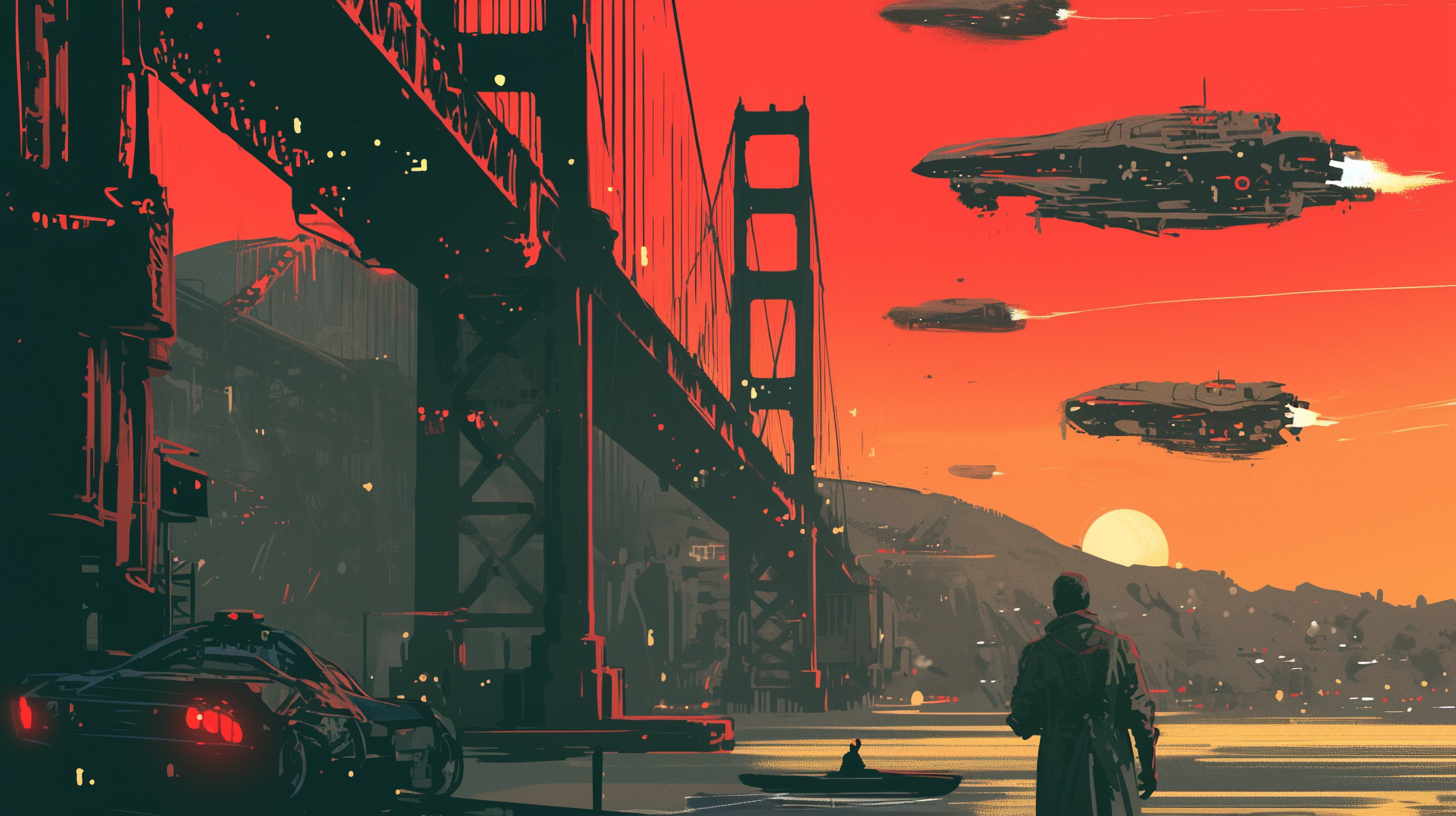 From these resources, Humanity built a giant drive-array in the pacific ocean to propel earth from it’s host star to the Gaia system at the turn of the century in 2200. Given that Earth’s formal name is still Sol III, the newly founded government was likewise named “Unified Planets of Sol” Due to the composition of the star Gaia and the position of earth’s new orbit, the sky is tinged in an twilight orange-red 80% of the day, only clearing up during the middle of the day.
San Francisco has become the Capital of Earth, and as such the Capital of the UPoS. Earth is experiencing a retro-phase where it has become very hip to dress like old 80s Noir films.
From these resources, Humanity built a giant drive-array in the pacific ocean to propel earth from it’s host star to the Gaia system at the turn of the century in 2200. Given that Earth’s formal name is still Sol III, the newly founded government was likewise named “Unified Planets of Sol” Due to the composition of the star Gaia and the position of earth’s new orbit, the sky is tinged in an twilight orange-red 80% of the day, only clearing up during the middle of the day.
San Francisco has become the Capital of Earth, and as such the Capital of the UPoS. Earth is experiencing a retro-phase where it has become very hip to dress like old 80s Noir films.
First Gate War (2318 - 2329)
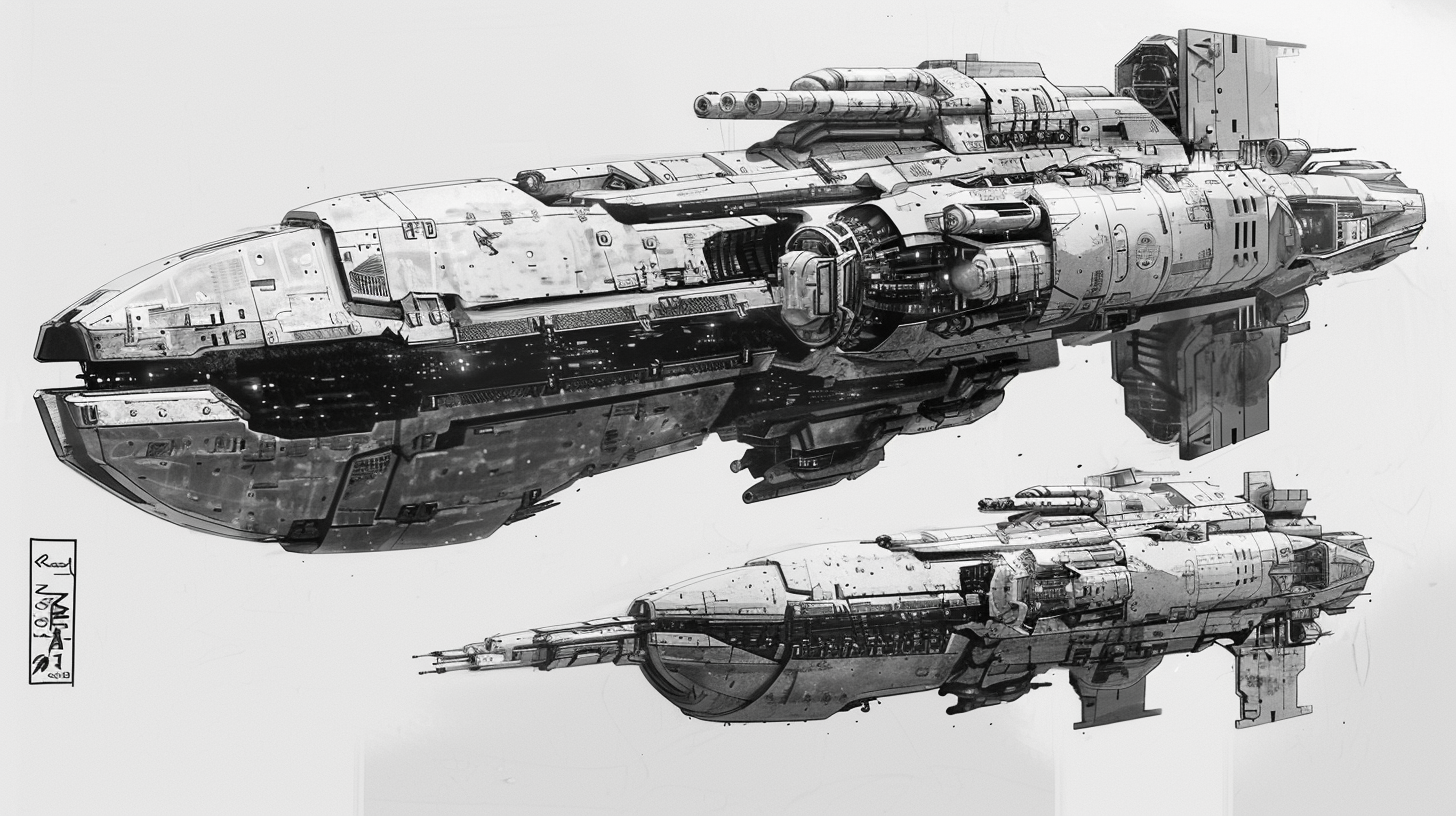 The buildup to the First Gate War was marked by a volatile combination of escalating piracy, unchecked private militaries, and rising tensions among humanity’s expanding colonies. By the late 2300s, the UPoS had consolidated much of known space, but this rapid growth left vast regions under loose control, with only a modest civilian fleet to patrol and protect them. Wealthy trading syndicates and resource-rich colonies began commissioning their own armed vessels, forming what they claimed were “defensive” flotillas to guard against piracy. In reality, many of these private forces blurred the line between commerce and coercion, some even conducting raids on neighboring systems. UPoS leaders were hesitant to respond forcefully, fearing that increased militarization could fracture their fragile alliances. However, the threat grew undeniable as these factions coalesced under a new government, which would evolve into the Terran Empire over the course of the war. When rumors spread that this coalition had begun smuggling arms through the Jetgates, the UPoS finally mobilized its resources, drafting civilian ships and hastily forming a defense force to confront the insurrection
Second Gate War (2400 - 2420)
The Second Gate War ignited at the turn of the century with an assassination attempt on Ambassador Eliyana Draven, the chief diplomat overseeing UPoS relations with neutral systems bordering Imperial space. Draven was a known advocate for extending UPoS influence in the Kryx Nebula through alliances and trade agreements, something that the Terran Empire found threatening to their growing sphere of influence. Her efforts in solidifying treaties with border systems and ensuring access to key trade routes were undermining the Empire’s covert expansion and tightening their options for strategic and diplomatic maneuvering. 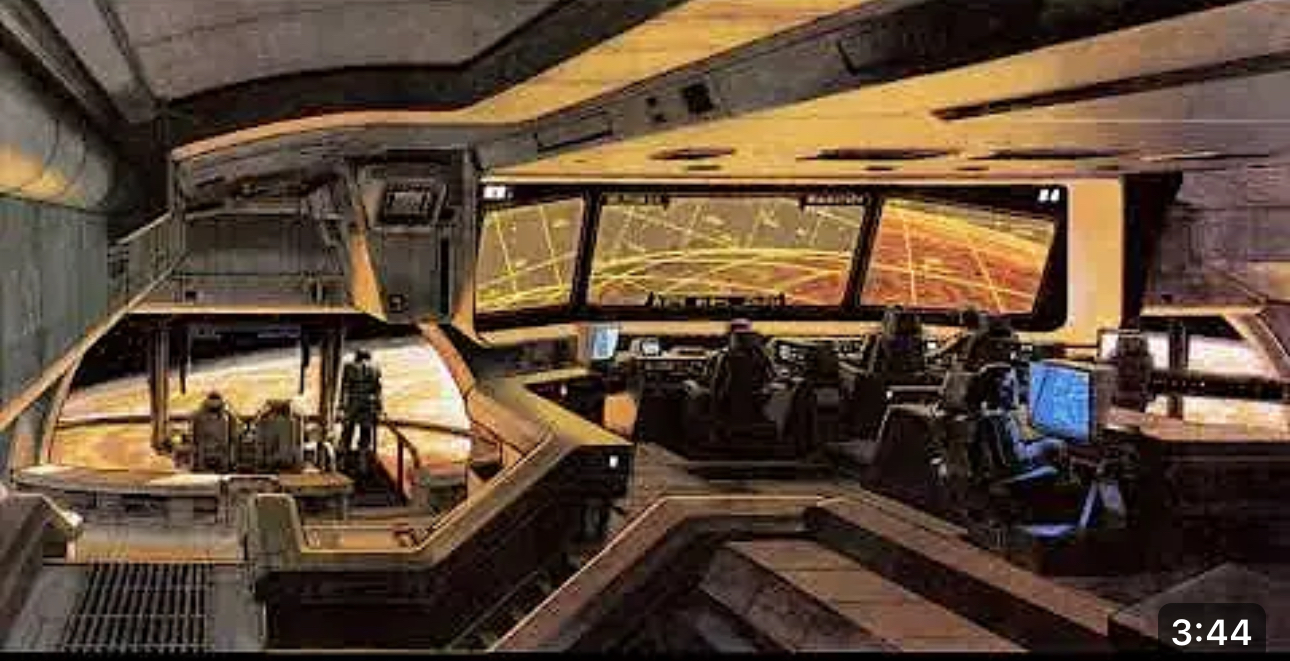
The war quickly escalated, with skirmishes erupting across the Kryx Fields and toward the southern galactic edges, but the focal point of conflict was in the rallying of independent world in the Kryx. The Kryx Nebula Fields are a giant region of space rich in resources, which could bring whoever has the most influence over it a major advantage in the stirring war-for-knowledge that started to develop in the milky way. Though this highly political, nuanced and multi-faceted factor of the war was never the focus of the public. Instead, the main civilian attention was at the direct borders between the UPoS and the Empire.
The Battle at the Twin Gates became the culturally defining period of the war. The Arcadia sector held two rare and highly strategic Jetgates within UPoS space, remnants of UPoS control since the First Gate War. The gates are positioned only a few hundred lightyears apart, and became a critical choke point; if the UPoS Outbound Gate, the southern one, fell into Imperial hands, they would gain direct access to several key sectors. The UPN deployed over half of its fleet, fortifying the line between the two Jetgates to mount a defense. The Imperial navy, In a surprise strike with diversions in other battlefields, captured the Empire Outbound Gate. The battle raged on for weeks. Despite the Terran Empire’s fierce assaults, the UPoS defenders managed to hold, preventing a breakthrough to the Gate that would allow access to the rest of UP space. No one won the Battle at the Twin Gates, and the line still stands as it was back then. Attrition wore both sides down to a grinding halt in other parts of the galactic south, and eventually, a necessary ceasefire established itself. Parallel to that, the Empire saw itself diminished in its ability to wage war due to the events in the Terran Civil War.
The war ended with the formal establishment of the Serengeti Line, a heavily patrolled demilitarized zone running along the contested territories. While it was seen as a miracle in the diplomatic community, it only solidified a tense, cold-war stalemate between the UPoS and the new state of the Confederacy of Terran Gates.
Modern “Unified” Planets of Sol
Philosophy
Placeholder
Relationships
| Faction | Relationship Type | Description |
|---|---|---|
| Lanternyard Incorporated | Commercial Partnership | Arms supplier and diplomatic relations |
| Confederacy of Terran Gates | Political Rival | With a violent past and a common history, the two are locked into a cold war within the Kryx Nebula Fields |
| Free People of Badigo | Insurrectionists | The Free People of Badigo have declared independence in the Albion sector and have managed to resist authorities, now they are trying to spread their ideology through all available means. |
| Archivo Urkantone | State-Backed Research Institute | UPoS cooperates with the Urkantone to investigate pretech artifacts and space phenomena. |
| Cirani Nomads | Refugees | The Cirani Nomads are allowed and protected to conduct their traditional migrations in UPoS space. |
Organization
Headquarters: Earth, Gaia
Leader(s): Presidentum Trinity Eastborne
Prominent Members: Mondamon Adathan (Prime House Representative of the Arcadia Sector),
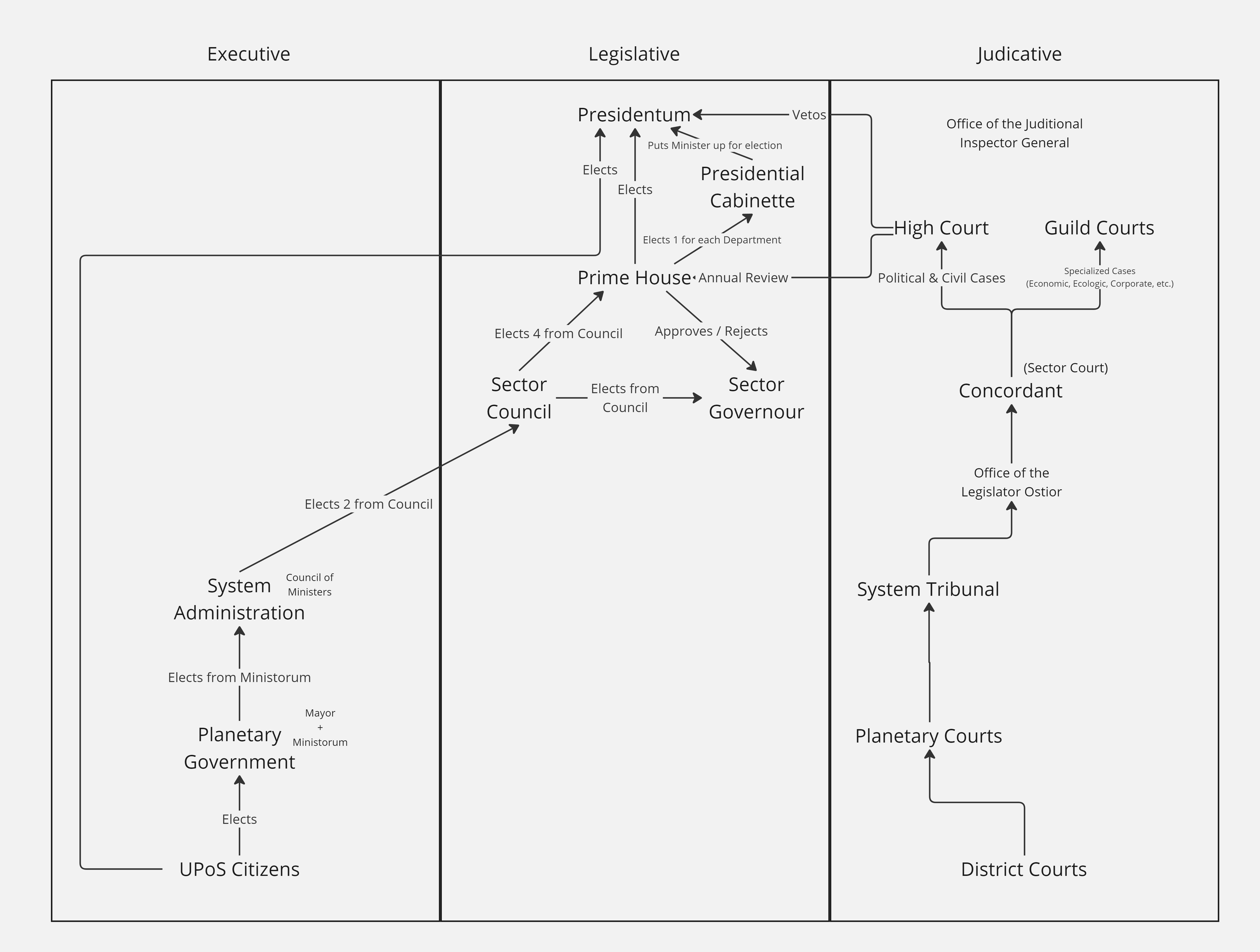
Unified Planets Navy
During the Buildup to the First Gate War in 2318, A fleet of militia starships was scrapped together from the before almost exclusively civilian fleet of ships roaming human space. Against the what was then still considered just a collection of pirate syndicates, this was not enough for the clearly intentional arming of the imperial ships. The lesson was learned and by the start of the Second Gate War roughly 60 years later in 2389, both sides had an influential and galaxy spanning military projection force that was hard to look at when clashed together along the lines of today’s demilitarized zone, the Serengeti Line. The UPN boasts a roster of different starship models for fleet wide operations, while also being the vessel for any other branches of the military like the Unified Planets Army, Intelligence Bureau and others.
Resources
Placeholder
Methods
Placeholder
Background
Placeholder
Additional Details
Placeholder